 8 Sissinghurst Castle and Gardens, Kent, and Vita Sackville-West
Love at First Sight 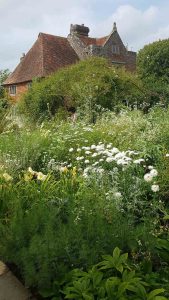
As with most other writers and their homes in this series, Vita Sackville-West fell in love with Sissinghurst at first sight. She claimed ‘I saw what might be made of it. It was Sleeping Beauty’s castle…’ The castle, near Cranbrook in Kent, had been owned by Vita’s Sackville ancestors, which gave it an added attraction for her given her desolation at being unable, through Salic law, to inherit the family’s Elizabethan pile at Knole.
A Potted (Potting?) History
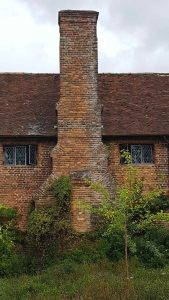 Like Knole, Sissinghurst Castle, was principally Elizabethan. It had ancient origins (‘hurst’ is the Saxon word for ‘wood’) and evolved from a pig farm into a medieval moated manor house owned by the de Saxinghertes (only part of the moat remains). During the 1530s, the daughter of the (by now, Baker) family married Thomas Sackville, 1st Early of Dorset, and her family enlarged the property into a magnificent renaissance courtyard house with vaulted gallery and 37 chimneys centred around the tower, surrounding these with a deer park. Two monarchs visited Sissinghurst: Edward 1 in 1305 and Elizabeth 1st in 1573.
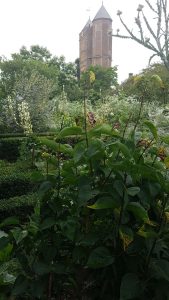 The house fell into disrepair during the Civil War. In the 1760s, it was used to house 3,000 rather destructive French prisoners from the Seven Years’ War. In the 1790s Sissinghurst was used as a Poor House for up to 100 men! Things improved under the Mann Cornwallis family in the early 1800s but the decline then continued as the bricks and stone were taken for local building. In the Victorian era, the focus at Sissinghurst was its farmland so, unlike Knole, by the 1930s Sissinghurst was a ruin, up for sale for £12,000 and requiring enormous amounts of restoration to the house (and clearing to the garden).
Harold and Vita at Sissinghust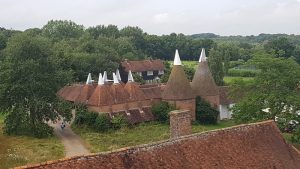
In 1930, Vita and her husband Harold Nicolson acquired Sissinghurst Castle and moved in with their two boys.
Her passion was just as well given none of the buildings was habitable. They had been used for decades as accommodation for farm workers and the gardens were full of rubbish apart from the areas for vegetables grown to feed said farm workers.
Vita had to start writing again as Harold had retired and no longer received his diplomatic salary – and they had fees for Eton to pay for.
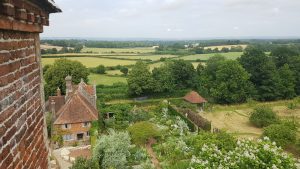 The Nicolsons took the ruined Elizabethan hall, tumbled sections of wall, and picturesque stand-alone dual tower and transformed them into a romantic home. The ancient architecture in warm clay brick was gradually softened by lush planting of the flowers Vita loved, artfully enhanced by Harold’s more formal structuring using classical lines and geometric patterns.
Impact on Garden Design
Vita’s Key principles
- Ruthlessness: if it doesn’t please, change it.
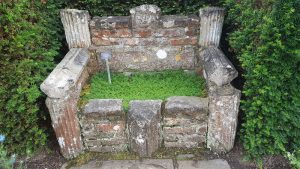
- Welcome Untidiness: allow plants to self-seed where they wish, including wild ones, if the effect pleases you.
- Have three plans for a space: architectural, colour, seasonal.
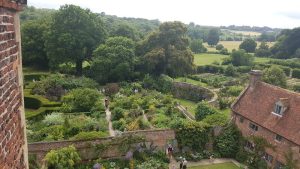
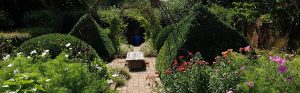
Vita’s – then very experimental – idea in her quest for an intimate and private space was to create a series of ‘rooms’ within the garden so that the eye would not be able to comprehend the whole in one glance, and visitors would be drawn from space to space by tantalising glimpses of delights beyond. From Vita’s wonderful tower writing room (and eerie), she could look down on the arrangement and absorb the patterns and beauty of these outdoor rooms.
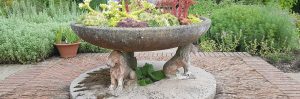
Although an amateur gardener, Vita had learned by experiment at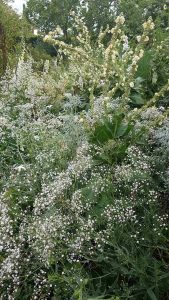 her previous garden. At Sissinghurst, she and Harold created the renowned ‘White Garden’, the Rose Garden, Orchard, Cottage Garden and Nuttery amongst others. Her idea of working with a single or restrained palette of colours in the different ‘rooms’ placed great emphasis on texture, and the Nicolsons delighted in the perennial challenge of finding combinations that pleased them.
Vita’s gardening column provided an expression 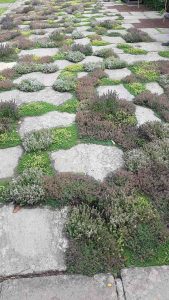 of her own learning and experiments with horticulture that was extremely popular and drew many visitors to what became one of the most famous gardens in the UK.
The Nicolsons also entertained a raft of literary, artistic and political friends at Sissinghurst through their aristocratic and bohemian Bloomsbury connections, sharing their design ideas and inspiring other gardeners.
The garden was first opened to the public in 1938. Vita coined the term ‘shillingses’ for the people who put a shilling in an old tobacco tin to see her transformation of the space.
During WW2, the Women’s Land Army maintained milk production for the country by tending and milking herds of cows and by the 1950s Sissinghurst was a working farm. As might be expected of a woman of her energy and passion, Vita was thoroughly involved.
Acquisition by the National Trust
 Vita became a founder member of the National Trust’s garden committee in 1948. After Harold died in 1968, the family gave the property to the National Trust, which allowed the Nicolson descendants the left wing of the long house in perpetuity. The current inhabitant is married to horticulturalist, Sarah Raven, whose beautiful Perch Hill Farm (below) in nearby East Sussex, is also a joy for gardenistas.