

The Mevagissey Model: Does Farage Have a Point about New Builds and Second Homes?
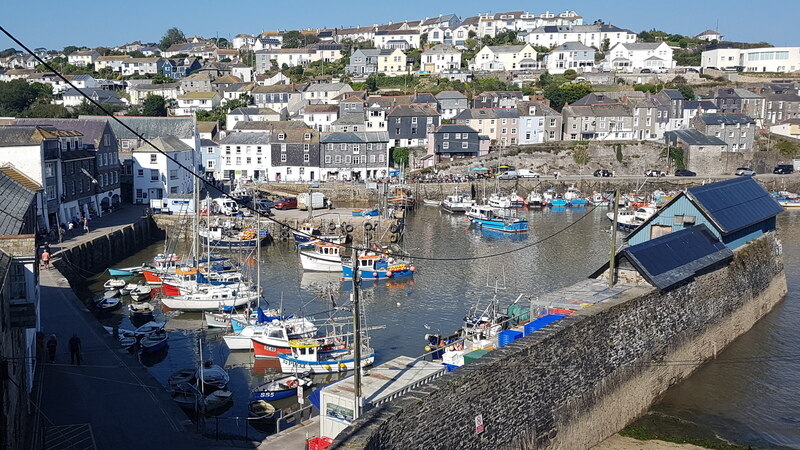
Nigel Farage recently cited the Mevagissey model in Cornwall as dealing effectively with the issue of second home ownership. He stated: ‘The real solution is the Mevagissey solution where you build new-builds and they are only for sale for genuine local people’. Farage also attacked the current double council-tax premium on second home ownership (treble in Wales). He sees this as a ‘madness’ that deters individuals from benefitting their secondary local economy.
Mevagissey is a historic fishing village hugely popular with tourists, centring on a pretty harbour. Its ‘main’ access road is single track with few passing places. This road takes you up the 1:4 slope of Polkirt Hill and regularly provides locals with amusement as holiday makers who can’t reverse face off the drivers of large vehicles that also (but for different reasons) can’t reverse. Both sides build up queues behind them which can lead to hours of delay and road rage.
In 2018, anxious not to emulate the creeping winter blackness of the second-home ghost town that is nearby Fowey, residents voted 90% in favour of banning incomers from buying new homes. Since that point only 6 new houses have been built, most of them round the corner in Portmellon. Since then, hacked off developers have given up, pointing out that affordable housing has been cut (as well as their opportunity to profit).
Other pretty places have passed similar policies: St Ives, in Cornwall, and Bamburgh, Beadnell and Seahouses in Northumberland, for example.
So, what are the UK’s Second Home Taxes and Do They Work?
Since 2024, if you buy a second home in the UK, you will be taxed at every stage: purchase, ongoing occupation, rental income, and sale. The aim was to raise money for local councils and to make up for losses to local economies from short-term residents. It was also to deter people from buying up properties, thereby releasing housing stock and reducing prices to make property more affordable.
At Purchase: Stamp Duty Surcharge
The second home stamp duty surcharge currently stands at 5% on top of standard rates across all bands in England and Northern Ireland — raised from 3% in October 2024. On a £300,000 second home, the 5% surcharge alone adds £15,000 to the bill, on top of the standard £2,500, for a total of £17,500. Scotland charges a 6% Additional Dwelling Supplement, and Wales charges 4% under separate legislation.
Ongoing: Council Tax Premiums
From April 2025, councils in England have been able to charge a premium of up to 100% additional council tax on second homes, at their discretion, up to double the standard rate.
According to Hamptons’ December 2025 analysis, roughly 84% of England will be charging double council tax on second homes by the end of the 2025-6 tax year. An average Band D council tax bill of £2,171 per year will cost a second home owner around £4,342 annually from April 2025. 360 Associates 1
Since April 2023, Welsh councils have been able to charge premiums of up to 300%, and 20 of 22 Welsh councils are now charging at least an extra 50%.
Scotland introduced similar powers in 2024, and in October 2025 MSPs voted to remove the cap on premiums altogether.
On Rental Income
Individual landlords can no longer deduct mortgage interest from rental income. There is only a basic rate 20% tax credit that applies to finance costs, meaning higher-rate and additional-rate taxpayers receive less relief than previously.
In April 2025, the special tax treatment of Furnished Holiday Lets was abolished, so owners of such properties cannot deduct mortgage interest in full or benefit from favourable capital gains treatment. HomeOwners AllianceGOV.UK
From April 2027, property income tax rates are set to increase by a further 2%, to 22%, 42% and 47% across basic, higher and additional rate bands respectively. This will raise an estimated £500 million a year in extra tax.
On Sale: Capital Gains Tax
Raised in October 2024, CGT for the 2025-6 tax year were raised from 10% (basic rate taxpayers) and 20% (higher/additional rate taxpayers) to 18% and 24% respectively.
CGT from second homes must be paid within 60 days.
High-Value Properties: The ‘Mansion Tax’
From April 2028, a new High Value Council Tax Surcharge will be payable on homes worth over £2 million from April 2028.
This will cost owners between £2,500 and £7,500 per year depending on property value. This puts the council tax up to the region of £11,700 per annum for second home owners in premium-charging areas with properties worth over £2 million. Net Lawman
Has it Worked? Are Councils Better funded?
The system has raised money but evidence suggests this is not efficient and there have been some important unintended consequences.
Loopholes
According to Savills, because Business Holiday Lets rated for business at less than £12,000 pay neither business rates nor council tax, some property owners in Cornwall and North Yorkshire have registered homes as business holiday lets. Cornwall has 11,450 such properties so the local authority is missing out on £59 million per annum.
Money from Second Homes’ Council Tax is not ring-fenced
Hard-pressed Councils are not obliged to spend the money raised on housing and have many other valid calls on their finances. Analysis by The Telegraph found that as little as 9p in every £1 generated is being spent to tackle the housing shortage.
Does it deter people from buying second homes?
Not necessarily. Certainly not in North Devon where the number of second homes and holiday lets increased to its highest level in seven years. In the South Hams, average property prices fell slightly from £486,000 to £427,000 but current global uncertainty has had more of an impact. In Tenby, Pembrokeshire, property prices fell when the premium rose to 200% but bounced back when this was reduced to 150%.
Even where homes do come onto the market, locals often cannot afford them.
As seen above, average property prices in popular areas like the South Hams are still very steep for first time buyers. Ditto in areas of Wales with the highest second home premiums like Powys and Ceredigion, only 2.7% of first-time buyers could actually afford to buy the properties released.
Conclusion:
A YouGov poll found 64% of people backed an increase in the second home premium. It has certainly raised revenue for local councils but that money is not leading to more housing and it has not deterred second home ownership, so prices remain high and availability remains low.
Is Farage right? There remains a major question:
- If property prices in desirable locations remain high,
- if second home-owners can still buy existing properties in them,
- If Councils are not putting the money raised into building affordable housing
- if no altruistic developer will build (profitless) affordable housing
then how can local people on local wages ever manage to buy in their home villages?