

Cost of Maintaining and Upgrading the Houses of Parliament
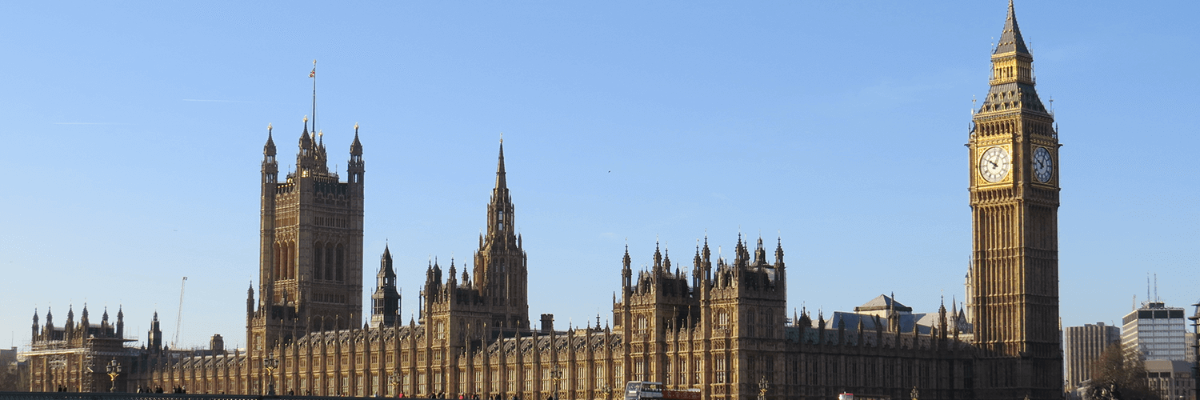
When working on a Buildings Reinstatement Valuation, or a schedule for maintenance, be grateful you are not preparing one for our iconic Palace of Westminster, home of our Parliament.
The Palace of Westminster represents democracy in the UK.
It is a Grade 1 listed building and a UNESCO World Heritage Site.
It also costs approximately £1.5 million per week to maintain and repair.
A press release on 15 June 2026 stated that the Palace of Westminster ‘requires extensive restoration to address serious risks, including failing mechanical and electrical systems, fire safety issues and high levels of asbestos’.
This £1.5 million is rising. As we all know, building and maintenance costs have soared for both materials and labour. As a consequence, every delay in moving forward with repairs sees prices rise again, to the tune of an estimated £70 million per annum simply in terms of costs of metaphorical fire-fighting. The total cost including upgrades and renovation rise to £250-300 million per year of delay.
Historically the Palace has been maintained by in-house teams who work around parliamentary business to keep visitors and those who work there safe. On average, these maintenance teams respond to 2,900 ‘reactive jobs’ and work on ‘380 small projects’ per month.
This is not sustainable: the issues outstrip the management of them. And that’s before considering the need to adapt a historic building for modern working practices.
The website reports that since 2016 there have been
- 36 fire incidents;
- 12 asbestos incidents; and
- 19 stonemasonry incidents.
In addition, 88% of Palace access involves steps! What price accessibility?
Is it a practical and cost-effective location for Britain’s democratic decision-making and the thousands of people who work within it? In a public poll, 72% said ‘yes’, so in 2012 Parliament dismissed the idea of relocating, concluding that the Palace must remain the seat of Government and be preserved for the nation.
Action?
It took some 10 years to agree a committee structure and assess options for the restoration programme.
The aims of the R&R Programme are to:
- ‘Restore the iconic home of Parliament while ensuring value for money and supporting thousands of jobs and businesses across the UK.
- Preserve the Palace as an internationally recognised symbol of the UK and the home of Parliament for future generations.
- Directly benefit the thousands of staff who work here and one million people who visit each year, by improving accessibility, fire safety, reliability and efficiency of services, security, visitor access, and health and safety. ‘
This will be done by providing ‘lasting opportunities’, including economic ones, to all countries and regions of the UK by:
- Supporting between 1,500 and 4,000 jobs per year;
- Aiming to provide 1,000 apprenticeships and traineeships for people across the UK;
- Boosting specialist skills;
- Revitalising traditional crafts and specialist trades.
https://www.parliament.uk
On February 5th, 2026, the Restoration and Renewal Client Board published their report and is now seeking parliamentary approval to reduce the number of Programme options to two from the original four:
- Full decant: £11.1 billion to £15.6 billion, 19 to 24 years
- Enhanced Maintenance and Improvement plus (EMI+): £19.5 billion to £39.2 billion, 38 to 61 years
Relocating (‘decanting’) politicians and staff from the Palace is obviously hugely disruptive as well as expensive and logistically challenging, but issues such as removing asbestos cannot be undertaken lightly.
The first seven years’ focus:
- Building temporary accommodation to support future moves of both Houses necessary under both options;
- Preparations for the restoration of the 500-year-old Cloister Court and refurbishing the inside of the Victoria Tower;
- Starting underground construction and tunnel shafts, and building river platforms for future construction work;
- Designing and building a standalone, off-site heritage collections storage and conservation facility.
Expenditure for this phase is capped at £3 billion (£429 million per annum). The wheels of politics turn slowly, but with prices rising, it would be a good idea to make some decisions and get on with it.
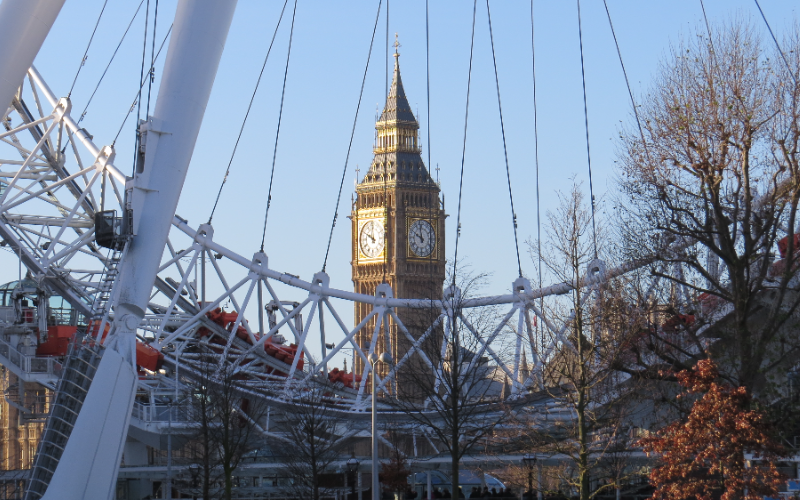
Key Events in the History of The Palace of Westminster.
- The term Palace derives from the 11th century when William the Conqueror adopted as a residence a former Benedictine Abbey that had evolved from an Anglo-Saxon church.
- The 8th century church was dedicated to St Peter which was west of St Paul’s (the East Minster) and therefore became the ‘West Minster’.
- From 1259, Edward III hosted parliamentary events, such as state openings, in his private apartment, the Painted Chamber, at Westminster.
- In 1834 the Palace burned down and centuries of remodelling by some of the greatest names in British Architecture were lost. The only parts of the old Palace to survive were Westminster Hall, the Jewel Tower, the Undercroft Chapel, and the Cloisters and Chapter House of St Stephen’s.
- Parliament rejected William IV’s attempt to offload his late brother’s palace at Buckingham Gate as the new venue. Instead, a competition was held to decide a new design for the original site.
- The winning Gothic design was submitted by Augustus Pugin through the architects James Graham and Charles Barry because Pugin had converted to Roman Catholicism. Catholicism at that time would have been the death-knell to his chance of winning and he had to see Barry awarded the £1,500 prize. According to the Architectural Magazine, ‘Barry’s’ design consisted of “a quadrangular pile, with the principal front facing the Thames, and a tower in the centre, 170ft high”.
- Why Gothic? Because the Prime Minister, Robert Peel, ensured that the committee controlling the competition was not comprised of some top names who disliked him and were fans of classical architecture. We therefore lost out on a possible Neo-Classical Parliament building designed specifically to showcase the Elgin Marbles, which given the current climate is just as well.
- Work began in 1840 and the final details were finished some thirty years later.
- During World War II the Palace of Westminster was hit by bombs on 14 separate occasions, sustaining significant damage and costing three lives.
- Post War repair work accounts for the last major restoration work (apart from the cleaning process started in 1981) which explains the need for the phenomenally expensive project.