

Uk Houses are Amongst the Smallest in Europe
Low Sites: UK houses are among the smallest in Europe!
Are UK Housing Regulations Fit for Modern Life?
This article examines current UK building regulations, particularly with regard to size and parking, and considers whether they are still fit for purpose.
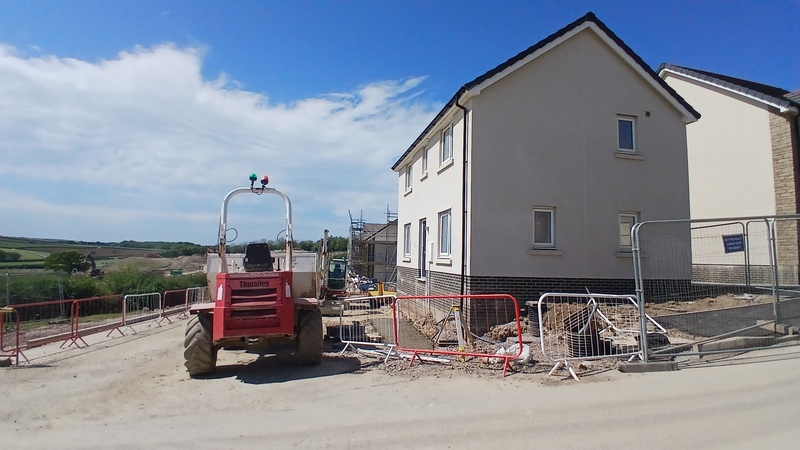
The UK builds some of the smallest ‘homes’ in Europe.
Average new build houses in Britain measure approximately 76 square metres — compared with around 109 m² in Denmark, 115 m² in the Netherlands, and 137 m² in Ireland. Yet the regulatory framework that governs the size, design and amenity of new homes remains patchy, largely optional, and in some respects barely updated since the mid-twentieth century. The question of whether current rules are adequate for how people actually live today is increasingly urgent.
The Space Standards Framework: the Nationally Described Space Standard
The primary national benchmark for new home sizes in England is the Nationally Described Space Standard (NDSS), introduced in 2015 by the Department for Communities and Local Government. The NDSS sets minimum gross internal areas (GIA) by occupancy and number of storeys. Key thresholds include:
- Studio / 1-person flat: 37 m²
- 1-bedroom, 2-person flat: 50 m²
- 2-bedroom, 3-person flat: 61 m²
- 3-bedroom, 5-person, 2-storey house: 93 m²
- 4-bedroom, 7-person, 2-storey house: 120 m²
The NDSS also sets minimum bedroom dimensions: single rooms must be at least 7.5 m² and at least 2.15 m wide; double/twin rooms at least 11.5 m², with one double at least 2.75 m wide. A minimum floor-to-ceiling height of 2.3 m must cover at least 75% of the floor area, with London’s tougher rules requiring 2.5 m.
The critical weakness in this system, however, is that the NDSS is not mandatory nationally. Local planning authorities must adopt it voluntarily through their Local Plan. A significant number of councils — particularly in London and the South East — have done so, but many have not. Where the NDSS has not been adopted, there is no enforceable minimum home size beyond very basic Building Regulations requirements for habitable rooms. In areas without NDSS adoption, developers retain considerable freedom to build significantly smaller homes.
The older statutory backstop comes from the Housing Act 1985, which specifies that a bedroom for a single adult must be at least 6.51 m² — a space so small it induces claustrophobia at the thought of it.
Parking: A Patchwork of Local Rules
Parking Space Standards
There is no single national standard for residential parking space: local authorities set their own requirements, guided loosely by the National Planning Policy Framework (NPPF). This asks councils to consider car ownership levels, accessibility to public transport, and the type of development. Typical local guidance suggests:
- 1-bedroom dwellings: 1 space per unit
- 2–3 bedroom houses: 1–2 spaces per unit
- 4+ bedroom houses: 2–3 spaces per unit
For families with adult children still at home, this puts considerable pressure on parking spaces and can lead to streets congested with cars that have nowhere else to park.
Parking Space Dimensions
In 1976 the average car size was 1.62m x 4.01m, today it is 2.03m x 4.52m. Building Regulations (Approved Document M) defines a standard parking bay as 2.4 m wide by 4.8 m long which is very tight for a modern SUV or family car.
In areas of high public transport accessibility, particularly in urban centres, councils may require little or no parking at all, with London actively discouraging car parking provision in well-connected locations.
Are These Standards Fit for Purpose?
The honest assessment is: partially, and inconsistently.
Size
On size, the NDSS minima seem to be considered absolute by architects and housing campaigners rather than a starting point. In 2011, before the NDSS was even introduced, the eight largest UK housebuilders were selling houses were on average 8 square metres below what Greater London had already coopted as its minimum.
In addition, the fact the national standard is optional means that buyers in many parts of England have no guaranteed minimum. The 2025 London Plan guidance recommends “best practice” homes running 10–14% larger than the NDSS minimums, reflecting a recognition that the national benchmarks are themselves inadequate.
Increasing space standards has a compromising impact on affordability. The Centre for Cities has argued that the 37 m² minimum for a single-person flat is already 50% larger than what the average renting Londoner can afford. The knock-on from inflating minimum sizes, is a potential reduction in supply and increase in prices for the very people they aim to help. This is a live and unresolved tension in housing policy.
The covid pandemic accelerated another negative issue with the NDDS which is that they do not make any provision for a dedicated study or office space to allow for working from home. The NDDS was designed around a pre-covid model of domestic life.
Houses with no room for a desk, no separation between working and sleeping areas, and no broadband infrastructure requirement are increasingly unsuitable for a large part of the workforce. The 2023 London Plan Guidance acknowledged this, adding guidance on work-from-home spaces — but this remains guidance, not regulation, and applies only in the capital.
Parking
On parking, the picture is similarly mixed. The standard bay dimension of 2.4 × 4.8 m was adequate for the average car of the early 2000s but is a poor fit for the larger vehicles now common on British roads. Many parking courts and driveways on newer estates prove too small in practice.
In addition, the push towards electric vehicles raises new issues as although charging infrastructure is beginning to appear in building regulations, provision remains inconsistent.
The broader conflict is between the suburban model and the urban/environmental agenda. The former assumes occupants will own cars and need ample parking while the latter is aiming to reduce car dependency. Neither the current standards nor local planning policy has fully resolved this dichotomy. Developments in areas with poor public transport are often granted with minimal parking, storing up problems for residents who cannot avoid car ownership but have nowhere to put their vehicles.
What Needs to Change?
- The NDSS should be made mandatory nationally, ending the ‘postcode lottery’.
- NDSS should be updated to include home working space, better storage and improved guidance on outdoor amenity.
- Clearer national guidance is needed relating to electric vehicle charging infrastructure
- More sophisticated approach linking provision to transport accessibility (currently at the discretion of individual councils).
And finally, size does matter…
Britain’s planning system rightly imposes detailed rules on fire safety, structural integrity, and energy performance in new homes. That the basic size of a human’s bedroom (or parking space) remains so thinly regulated is a peculiarity that serves developers’ interests more reliably than it serves the people who have to live in the homes they build.