

Are Tree Protection Orders Fit for Purpose?
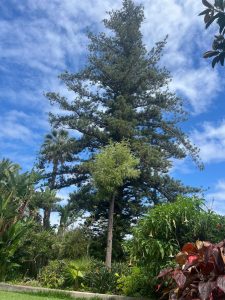
Following last month’s articles on inappropriate tree felling, we look at whether the Tree Protection Law, now 36 years old, is actually working.
Trees are the supposedly the ‘lungs of the earth’. Green is the colour scientists have found to be most restful to the eye. Trees provide shelter for nature’s little creatures and oak trees in particular can provide a habitat for over 600 species. Trees stabilise soil and drink up water thereby reducing flooding.
Trees are, in addition, a buffer against climate change; a source of shade and shelter, and benefit our mental health.
They are also, usually, beautiful.
It would follow that trees should be loved, valued and protected. To this end, applications for a Tree Preservation Order (TPO) may be made.
TPOs prohibit the following without written consent from the local planning authority:
- Cutting down
- Topping
- Lopping
- Wilful damage
- Wilful destruction
- Cutting roots
If consent is given, it can be subject to conditions which have to be followed.’
‘Owners of protected trees must not carry out, or cause or permit the carrying out of, any of the prohibited activities without the written consent of the local authority. As with owners of unprotected trees, they are responsible for maintaining their trees, with no statutory rules setting out how often or to what standard.’
However, while thousands of individual trees are theoretically protected by Tree Preservation Orders (TPOs) and councils’ Tree Preservation Officers are drowning in applications to add more, it is still proving all too easy for people to break the rules and get away with it. Prosecution is expensive and time-consuming and it is proving all too easy for people to get away with abuses.
Mark Ashdown of The Bristol Tree Forum, carried out research into how many planning enforcement investigations were undertaken by 99 local councils in respect of unauthorised work to trees either protected by TPOs or in conservation areas. He requested information using the Freedom of Information Act as to the issuing of stop notices, number of ensuing prosecutions and number of successful prosecutions since 2024.
His findings were desperately disappointing.
So far, only 87 councils have responded.
Of these:
- 2,328 possible breaches of the law were reported.
- Of these, only 77 resulted in any follow-up action. This is a mere 3.3% of the total.
- Of these 77, only 26 led to prosecution of which 16 (0.68%) have so far been successful.
While acknowledging that further detail is needed to understand these statistics, the statistics suggest a terrifying disconnect between the law and its enforcement.
Shining lights in Ashdown’s findings were Bournemouth, Christchurch and Poole Council where 158 investigations were carried out, albeit no enforcement action followed.
Liverpool City Council also shone, with 64 investigations and three prosecutions.
More worrying was Barnsley Metropolitan Borough Council where 12 investigations were reported and no enforcement action taken.
Ashdown’s findings show that the protections in place for trees are inadequate and it is time to revisit the law and look at ways to ensure that it might be changed to improve enforcement. One such improvement could be removal of the need to go to court. The lengthy process and legal costs may be a reason why councils are reluctant to engage with the issues.
In February, In Cossington, Leicestershire, an oak tree planted to mark the funeral of Sir Winston Churchill was cut down to make way for the entrance to a new Belway Homes Housing Estate. The developer promises to plant more trees, but those who had seen the oak planted were devastated at its destruction. The council had approved the felling when the development was approved.
In Hythe, Hampshire, the council has cut down the Scots Pine that was its own logo. Villagers were bereft but the tree was apparently dying.
On a positive note, in Devon this month, five individuals, including a tree surgeon wee fined after admitting to damaging eight trees protected by TPOs in Whiddon Valley, Barnstaple. The trees were reduced in height by 10’ and may not survive.