

A Student’s Guide to Starting and Ending a Tenancy
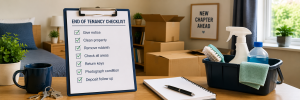
As the end of the University academic year approaches, we remind students how to manage their exit from rented accommodation and, we hope, retain their deposits.
Deposits
Deposits are a landlord’s reasonable protection against tenants causing damage to their property. Contrary to the image of grasping goblins depicted by the media, most landlords are just normal individuals trying to make a bit of money to provide an income or top up a pension. It is perfectly reasonable for them to want to protect the property in which they may have an emotional as well as a financial investment.
That said, two close family members of the author experienced less scrupulous landlords when at University in Liverpool and Birmingham who tried to withhold their deposits for student accommodation. Luckily for them, they were savvy girls who had taken the advice that follows. When unpleasant disputes began, their resident surveyor was able to step in and use their evidence to fight their respective corners.
If you follow the advice below, you should be able to relax and enjoy your student experience.
Before Term
Well before term starts make sure your documentation is in order. Check the small print of accommodation contracts. Make sure you know who to contact if you have any issues.
If possible, if sharing accommodation, try to negotiate that your guarantor is only liable for your share of the rent. It seems widespread now that agencies require guarantors to guarantee the entire rent for the property but if you can challenge this, do so.
On Arrival
It is easy to arrive at your university digs full of excitement. Unable to contain the thrill of making a room your own by filling it with items carefully chosen from home or rinsed from loving family in a two-hour stint in Ikea, it is tempting to unload everything immediately. This may not be helped by being given a time-slot in which to unload a car in student halls.
NO!
1 Try to contain yourself. Be practical. Before you do anything else, PHOTOGRAPH EVERYTHING. This includes:
- Every interior and exterior wall, especially any scuffed or cracked areas
- Skirting boards
- Window frames
- Bed frames and mattresses
- Carpets, particularly any staining,
- Furniture
- Interiors and exteriors of cupboards, fridges etc
- All shared spaces, such as loos, kitchens, sitting areas
- Areas behind furniture, fridges etc
- Showers, basins, toilets
- Any crockery etc that is provided
- Any hint of mould
- Any chips to woodwork, broken hinges, scorch marks on kitchen surfaces etc.
For your own protection, you need to make a ‘photographic record of condition’ by taking then storing these photographs in a format that ensures the images are dated. This is your evidence to prove the condition in which you took possession of the flat.
2 The landlord or agent should provide you with an inventory of contents. Check this through.
3 If you find anything of concern when photographing, or any discrepancy with the inventory, notify the appropriate person withing 24-48 hours of moving in. Record this notification.
4 Check and note your meter readings to ensure you are not charged for a previous occupants’ usage.
5 Check your notice period. Since the Renter’s Rights Act, this is likely to be a minimum of two months. It may seem a long time away but student life passes very quickly. Set a calendar reminder to give notice formally, in writing, by the required date.
6 Confirm deposit protection. In England and Wales, your landlord is legally required to place your deposit in a government-approved tenancy deposit scheme within 30 days. You should receive written confirmation of this. Keep that document safe.
During your tenancy
Report any issues that emerge IMMEDIATELY to the appropriate agency or individual. Record that you reported it. This can be problems like leaks or items that break, but also if something is damaged and requires attention. If you leave this until the end of your tenancy, you may not be able to challenge unfair withholding of a deposit.
At the End of the Academic Year
1 Ensure you give the correct period of notice, usually 1-2 months, for your contract. Record that you have done so.
2 CLEAN CLEAN CLEAN!
Round up your flatmates and set to with the hoover, mop and dusters. Thorough cleaning will reveal wear and tear. This could include new patches on walls or new stains on carpets, that might be considered over and above the standard wear and tear for which a landlord might reasonably withhold some of your deposit.
You will then have plenty of time to replace lightbulbs or hire a carpet cleaner before you are due to leave.
Don’t try to do a job for which you are unqualified: trying to replaster a wall could leave you with a bigger problem than you started with and cost you your deposit!
Leaving cleaning to the last minute can be a costly mistake.
3 When the notice period is ending, clean again. Look carefully at all the areas you photographed when you moved in.
- Tidy
- Restore items to their original places,
- Check shared areas, sheds, any gardens etc for your possessions.
- Remove rubbish.
4 Remember, your obligations will be based on the wording of your individual contract.
5 PHOTOGRAPH PHOTOGRAPH PHOTGRAPH!
This time, make an ‘Outgoing Photographic Record of Condition’, again with dates, and safely stored.
6 If possible, arrange to be present for the agent’s or landlord’s inspection. You can then address any issues at the time, including taking more photographs, rather than remotely where you only have their word for what they’ve seen.
7 Head for home.
8 Follow up on your deposit. Your landlord should return your deposit — or provide written reasons for any deductions — within 10 days of you both agreeing the final amount. If there is a dispute, use the free resolution service offered by your tenancy deposit scheme. At this point, the photographs and records of any issues will be invaluable.
We hope that, with this advice, you will be able to relax and enjoy a happy and productive summer free of landlord worries.