3 Rewilding: How long does it take Nature to Fight Back How? Part 2
In Part 2 of our article on rewilding, we look at how long it takes Grassland, Brownfield and Urban Land and Coastal/Estuarine land to recover from man’s involvement.
Grassland
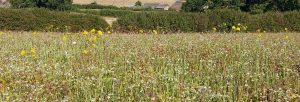
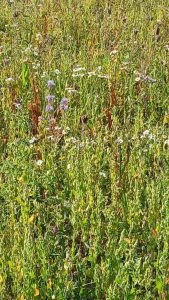 For the purposes of this article, ‘grassland’ is interpreted as ‘species-rich meadow’.
97% of the UK’s species-rich meadows have been lost since the 1930s.
Grassland that has been fertilised and seeded for agrarian purposes loses its seedbank of indigenous species and it is therefore impossible to recreate the pre-1930s meadowlands without active restoration.
• If active restoration takes place, plant diversity is visibly improved within 3-5 years.
• To achieve meadows of pre-1930s plant diversity and complexity takes 20-50 years.
• Some species will never return without deliberate introduction.
Most native wildflowers require well-drained, nutrient-poor soil. Active restoration involves stopping the use of fertilisers to reduce the soil’s nutrient levels and adjusting mowing time to allow seed to ripen and set. In addition, introduction of yellow rattle to suppress strong-growing grasses may take several cycles before more delicate native plants can establish. This may be done with plug plants or through introduction of bought-in seed from specialist nurseries. Experiments at specialist gardens like RHS Rosemoor in Devon have demonstrated the richness and biodiversity that may be achieved when nature is supported in this way. However, it will take much longer for meadows to re-establish without helping nature along.
Brownfield and Urban Land
Ironically, brownfield sites may recover more quickly than farmed grassland because, as explained above, native meadow flowers require nutrient-poor, well-drained soil. Land formerly used for industry and car parks, for example, mimics those optimal conditions for rewilding.
• Within 1–3 years, pioneer plants (Oxford ragwort, rosebay willowherb, buddleia) colonise, bringing butterflies, moths, and solitary bees almost immediately.
• Within 5–10 years, grassland and scrub mosaic develops, attracting breeding birds including skylarks, linnets, and occasionally lapwings.
• Brownfield sites can support higher invertebrate diversity than surrounding managed countryside relatively quickly — some of the UK’s rarest solitary bees and wasps are almost exclusively brownfield specialists.
Demand for such sites for housing or industry is more likely to prevent full re-wilding than natural issues.
Coastal and Estuarine Land
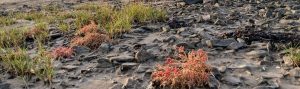
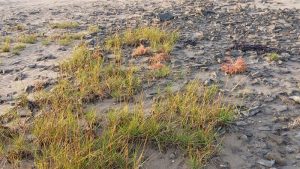
These include areas such as salt marshes and mudflats.
Encouragingly, these habitats can reestablish relatively quickly if part of a managed coastal realignment. This depends on the breaching of sea walls and defences to allow tides their regular pattern of rise and fall.
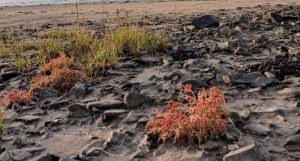
• 2-5 years sees colonising saltmarsh vegetation such as glasswort re-establishing rapidly.
• Migratory waders and wildfowl that need intertidal habitats quickly seek out such feeding grounds.
• 10-20 years allows for more diverse plant structure.
Coastal realignment is therefore one of the most significant opportunities for quick, large-scale nature recovery.
Conclusion
It is encouraging to find coastal and estuarine habitats are relatively quick to recover, along with the brownfield sites so often considered to be barren eyesores.
Unfortunately, the overwhelming findings of this research have been that, as stated last month, ‘put into human units of years and decades, a lifetime of four score years and ten, we will not live to see nature heal the damage we do and replace the habitats we are destroying. And in some habitats, neither will our great-great-grandchildren.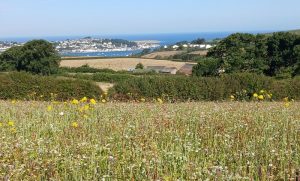
It is also difficult to decide whether the benefit of speedy recovery of coastal habitats is a blessing or not. With El Nino bringing unbridled weather, the benefit to birds and plants of breaching sea walls is offset by the devastating cost to the increasing number of property-owners for whom a dream waterside property is becoming an underwater nightmare.