
Chawton, An Austen Double Whammy: The Museum and The Research Centre
1a The Museum and The Jane Austen Society
Chawton House had been bought by the Knight family for the Bailiff of their Chawton estate in Hampshire in 1769.
In 1809, Jane’s brother Edward, was able to offer his widowed birth mother and his sisters the House to live in as he had been adopted by the wealthy but childless Knight family and had since inherited it.
After Jane died in 1817, Mrs Austen and Cassandra lived on in the house until 1845 when Cassandra died. The house then reverted to the Estate and was divided into three dwellings for estate workers. It was also used as an Estate Office and as a working men’s club.
In 1940, local lady Dorothy Darnell founded the Jane Austen Society to recognise her astonishing literary reputation and with the aim of saving Chawton House. A benefactor, Mr TE Carpenter, bought the property for £3,000 and set up the Jane Austen Memorial Trust to run the House as a Museum. He had lost his son Philip in WW2 and gave the House to the nation as a memorial to him.
In 1949 The Duke of Wellington opened the House as a Museum. It was still tenanted, so only the front room was accessible to the public. Gradually, more rooms were opened.
The Jane Austen Society funded repairs and gradually acquired the collection that is currently on display. It has also funded research and engaged architectural experts to establish how the rooms might have been decorated and set out when the Austens were living there.
Gradually the house is being returned to its historically accurate Jane-time state. Fortunately, much remains of the original ‘plain 18th century’ interior, including fittings such as floors, fireplaces, doors and cupboards. Amongst many other exhibits, there is a shirt Jane Austen made for her brother on display; it is a model of neat stitching. Visitors are also invited to play her piano, an instrument she practised regularly.
Jane Austen’s House now has Grade 1 Listed Building status.
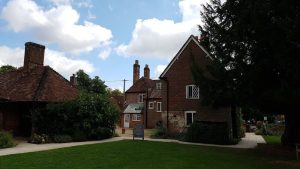 It is an accredited Museum and has a charming cottage garden, reminding us that the Austen ladies led a practical life, looking after livestock and gardening, as well as painting screens and sewing.
1b Jane Austen’s House, Chawton, Tech Spec
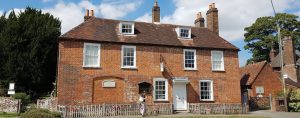
The square red brick house at the junction of two 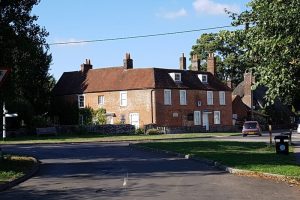 lanes was originally built 500 years ago as a thatched timber farmhouse. It subsequently became a coaching inn where travellers and their carriage horses could rest between legs of their journey.
According to its Grade 1 Listing, the house is
- 18th century
- Has walls of Flemish bond brick work,
- with cambered arches to the ground floor,
- There is a hipped tiled roof, brick dentil eaves and two flat-roofed dormers with sashes.
- The Southeast front was once symmetrical, comprising two storeys and an attic. There were five windows upstairs above two wide windows downstairs. The central upper window is now blocked, and below it the former entrance is now a window.
- Other alterations have been made to the ground floor windows.
- There are sashes in exposed frames.
- The doorway, which is north of the centre, has a moulded canopy on carved brackets and a six-panelled door.
- The long southwest elevation is similar, of three windows, the Flemish bond being mathematical tiles;
- at the east side is a Gothic sash.
- At the rear, the L-shaped block has three hipped roofs behind the front, one extended to a lower eaves above the staircase.
- There are two inscribed plaques at the front.
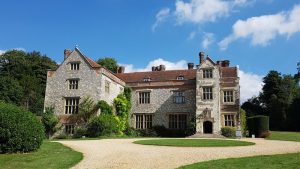
2 The Research Centre at Chawton House, The Chawton Estate
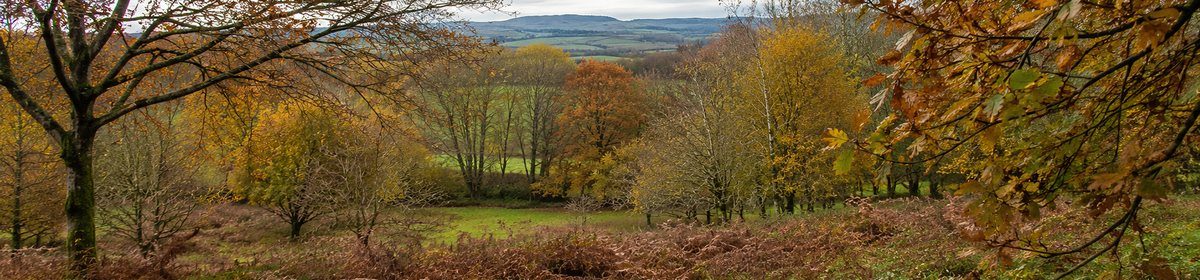
Chawton House is an Elizabethan manor house that sits cupped in a bowl of the hills in some 275 acres of rolling and wooded Hampshire countryside. There are two main storeys, an attic and gables and, built of flint with stone dressings and a tiled roof, the house rises naturally from its environment. On a sunny day, it positively glows. It is now a library and centre for research into early women’s writing, attached to the University of Southampton.
Nicholas Knight bought Chawton Estate in 1578 during the reign of Elizabeth 1. The first record of a manor house appeared in 1224 but the house you can see today was built for the Knights in the 1580s and remained in the family until 1972.
With its uneven floors and glossy wooden panelling, 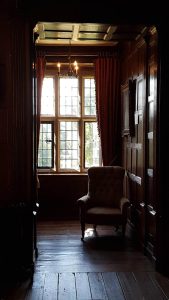 Chawton House is now renowned for its connection with Jane Austen. She would make the short walk up from her cottage to spend happy hours there, reading and visiting her brother and his family when they were in residence.
It was Austen’s genius that attracted the involvement and philanthropy of electronics millionaires Sandra Lerner and Leonard Bosack, co-founders of Cisco Systems.
By 1972, the House was in a poor state but contained the remnants of the fine library inherited by Edward Austen Knight which he had transported from his other estate at Godmersham Park, Surrey. This formed the basis of the research centre’s library.
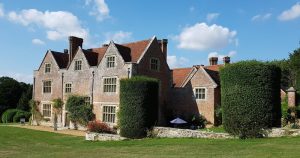 Out of the tired house and remnants of its library, ‘The Centre for the Study of Early Women’s Writing, 1600–1830’ emerged. Thanks to Cisco Systems, it now contains over 9,000 books, together with related manuscripts. Originally these were only accessible to specialist scholars, but in 2015 the property was opened to general visitors as well.
There is an excellent bookshop on site. Many volumes deal with period economics, putting context to characters’ lives, which is essential for understanding Austen’s writing. In this PropertySurveying newsletter recognising the big money in AI Data Centres, it seems apt to end recognising this connection.
WH Auden puts it brilliantly:
‘You could not shock her more than she shocks me;
Beside her, Joyce seems innocent as grass.
It makes me most uncomfortable to see
An English spinster of the middle class
Describe the amorous effects of ‘brass’,
Reveal so frankly and with such sobriety
The economic basis of society.’