

 What is the Environmental Impact of Data Centres?
With celebrated campaigner Erin Brockovich throwing her considerable environmental clout into the ring, here we look at the impact data centres have on their locations.
Data centres, particularly the hyperscale/colocation variety, are greedy of resources. As per our first article, they require:
- Power
- Water
- Land
Power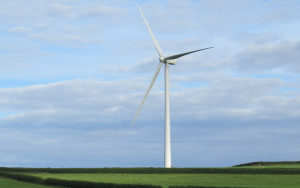
In 2024, data centres accounted for approximately 1.5% of total world electricity demand. By 2030, that percentage is predicted to double to 3%, driven by the exponential growth of AI workloads.
In Ireland, data centres now consume more electricity than all rural homes in the country combined.
America, ahead of the rest of the west, provides useful data. There, data centres are expected to drive nearly half the country’s electricity demand between now and 2030. By the end of this decade, they will consume more electricity than the combined US aluminium, steel, cement and chemical industries.
As a consequence, Americans are paying, on average, nearly 20% more for electricity than in 2024 and the country’s electricity rate increases reached over $60 billion.
In Northern Virginia, which houses the greatest concentration of data centres in the world, 2024 saw an 800% increase in energy prices. The consequence will be a 20% rise in electricity prices for residents in 13 states, which will jump to a rise of between 30% and 60% by 2030.
“We will fully utilize our energy resources, reducing costs for industries and individuals while making America a manufacturing leader once again.” There is a reason for President Trump’s declaration at Davos in 2025 and a large part of this commitment to use of fossil fuels is driven by AI and data centres. Consequently the net-zero pledges are being cast aside and fossil fuels are far from retirement.
Those fossil fuels are behind major environmental concerns for the American people. Some data centres rely on them for power and are negatively affecting the health of those living in their vicinity.
In the UK, investors are speculatively targeting areas where water sources and greener power sources seem to come together. In the Lammermuir Hills, there is a wind farm and potential piped gas; in Torrington, by the River Torridge, X-Links Morocco’s plans combine a data centre alongside a new BESS facility on an 850 acre site.

View of the Torridge Estuary, North Devon
Water: the secret – and growing – crisis
Water is the primary medium for Data centre cooling systems. Erin Brockovich is calling out those behind the mushrooming of data centres, believing the true water consumption statistics are not being disclosed. AI technology is particularly water-greedy.
According to statistics from Brockovich’s website, drawn in turn from research from UC Riverside, AI queries use considerably more than standard web searches. Riverside estimated that a short ChatGPT conversation of 10-50 questions consumes roughly 500ml of water, taking account of cooling and the regional power-plant water footprint. This figure could be higher depending on location and time of year.
5 million gallons of water are needed per day for one large data centre, the equivalent to one day’s use by a town of 50,000 inhabitants.
In 2023, Google’s global data centres consumed a total of 5.6 billion gallons of water, according to their own statistics. This is a 24% increase on the 2022 figure.
By 2030, the IEA’s projections suggest data centres globally will consume 1,200 billion litres.
Since 2022, two-thirds of data centres have been built or are being constructed in areas identified as facing high water stress. For example, Great Torrington in Devon, (mentioned elsewhere in this newsletter), has been under a hosepipe ban for the last month.
The water issue is exacerbated by the fact that most water is not reclaimable, either because it evaporates or because the residue is concentrated, containing pollutants such as PFS, nitrates and heavy metals. These contaminate local watersheds.
Furthermore, this return water reduces oxygen solubility, disrupting water-based wildlife, because it is warm and contains higher concentrations of dissolved minerals.
Wildlife and Loss of Habitat
There are five primary ways data centres disrupt these.
1 Habitat loss
The most visible issue. Hyperscale data centre campuses span hundreds of acres and the construction process affects more. An Amazon facility in Ohio destroyed approximately 10 acres of wetlands during construction. The Sunlaws application for the Lammermuir Hills near Duns will have a final footprint of 8.1 hectares (approximately 20 acres). A proposed facility in Alabama was found to threaten protected pygmy sunfish by depleting and altering their habitat.
2 Electrical Infrastructure
The impact on nature goes beyond the footprint of the site itself. Data centres require new transmission lines and substations. This means disturbance, and possible destruction, of further habitats. This may also be through obstructing animal movement, thereby reducing access to food and mates, and death through, for example, birds colliding with power lines. Previously untouched areas affected by new access roads take the human impact on nature further.
3 Noise and Light Pollution
These can disrupt nature’s highly sensitive communication systems. Nocturnal creatures depend on darkness for hunting and/or navigation.
The impact of these extends well beyond the perimeter of a data centre. Research has documented the impact of low-frequency noise such as that from large cooling systems, on wildlife.
According to the US Institute for Environmental Research and Education (IERE), ‘masking occurs when noise pollution obscures or prevents the perception of important sounds, such as communication signals, predator calls, or prey sounds.’
Bats rely on echolocation to navigate and locate prey. Disruption from huge data centres, as with other animal, insect and bird life, can lead to increased cortisol levels which reduces disease resistance and impacts ‘an animal’s ability to survive and reproduce’. In addition, noise can disrupt birds’ migration, leading them off course, or delaying arrival at breeding sites and affecting their ability to find suitable nesting sites.
Bees are vital to our food chain but are highly sensitive to noise, such as the low frequency noise from cooling systems, as they communicate through vibration, not hearing. According to Beekeepersrealm.com ‘Honeybees rely on waggle dances, short-range vibrational pulses through comb, and air-borne buzzes. Waggle dances encode distance and direction to floral resources. Comb-borne vibrations help coordinate brood care, forager recruitment, and task allocation.’ The impact of constant low frequency noise is worrying, particularly in a farming area.
An additional, and easily-forgotten environmental impact from data centres is that of the mining for raw materials. Many are required. One unfamiliar substance, picked randomly, is Hafnium, used in semiconductor chips. It allows for greater transistor density and lower power consumption in cutting-edge processors and memory devices. Hafnium is not found in nature but is processed from zirconium which is mined in Australia, South Africa, the US, Senegal, Mozambique, Sierra Leone and Madagascar. It is refined in France, the US, China and Russia. Consider the environmental impact of the mining, processing and transporting of this.

Conclusion
The genie is out of the bottle.
By 2030, annual investment in data centres is projected to reach between $1.7 and $3 trillion.
We cannot stop the tide of progress. We can only strive to mitigate oligarchical imperatives.
Ironically, even an AI search on Google has honestly concluded that we cannot reconcile the need for data centres with sustainable land, water and energy use.
Elon Musk’s space adventures may offer one way forward.
Let us pray to the God of Smart Things that the AI technology man has created will find a way to store data and develop AI on the metaphorical head of an environmentally-friendly pin.