
 Charging the Future: What You Need to Know About BESS
BESS facilities and Data Storage centres are among the most consequential pieces of infrastructure being built in the world today, environmentally, technologically and financially.
What Is a BESS?
A Battery Energy Storage System is an industrial-scale installation that captures surplus electricity.
BESS v Data Centre: definition
Battery Energy Storage Systems (BESS) and data storage centres are entirely unrelated.
- a BESS stores electrical energy in large banks of batteries.
- A data centre stores digital information on servers;
Why do we need BESS?
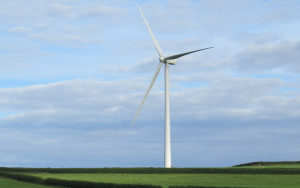
A BESS is like a giant rechargeable battery. Its technology allows energy from renewable sources to be stored long term and released back into the grid when demand exceeds supply. Previously, any precious excess energy generated was lost, a process called ‘curtailment’.
BESS also regulate frequency, responding within milliseconds to fluctuations in grid frequency, which is far quicker than previous technologies.
What is the BESS Tech?
The core technology in almost all utility-scale BESS installations is the lithium-ion cell, particularly the lithium iron phosphate (LFP) variant. This is valued for its safety characteristics, long cycle life, and rapidly declining costs — down from around $1,000 per kilowatt-hour in 2010 to roughly $139 per kWh in 2023.
What does a BESS look like?
A BESS typically consists of rows of battery modules housed in industrial containers, similar in appearance to shipping containers, connected to power conversion systems, transformers, and grid infrastructure. The sites resemble well-organised industrial compounds rather than the cavernous server halls associated with digital data centres.
BESS Bottom Line
Advancing renewal energy technology is the dream. Those at the forefront look to make a lot of money from it.
The global market for BESS was valued at approximately $32.6 billion in 2025 and is projected to reach $161 billion by 2034. In 2025 alone, 315 gigawatt-hours of new BESS capacity was installed worldwide, representing more than 50% growth on the previous year.