

The hidden cost of retirement flats. Our advice: stay healthy, die quickly.
My mother-in-law has a saying: ‘I don’t like age, and I don’t like its companions’. She usually means ailments and frailties, but the BBC has reminded her of a different ‘companion’, touching a raw nerve with her. Not only with her, but also with over 400 others, who have responded to a feature the BBC presented on the hidden costs of retirement flats.
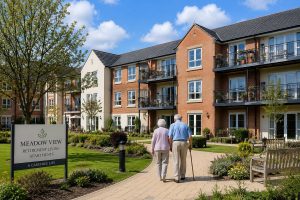
When the beloved family home becomes too much for one person, a retirement flat in a development specifically for those of advancing years seems a wonderful option. Offering protection, independence, no worries about maintenance and with the opportunity of a ready-made circle of potential new friends, Richard Osman’s ‘Thursday Murder Club’ has even made such living seem glamorous and exciting.
Whether you choose an apartment in a converted stately home or a comfortable purpose-built development, it all seems practical and perfect. The viper in the Garden of Eden comes double-tongued:
- such developments involve management fees AND
- those fees are usually payable until the apartment is sold, whether the resident simply wants to move on or has, sadly, died.
The management fee is a reasonable ask for the investing company. It covers the costs of maintenance and additional services or facilities apt for those advancing in years. However, as we all know, labour, fuel and building costs have risen very sharply, particularly since covid, and are likely to continue to do so while the world’s political situation remains unstable. As a result, management fees have increased significantly, in some cases, doubling.
Many people, still fit in their early 60s, later find they need to move, possibly to be closer to loved ones or to somewhere with more extensive care facilities. It is often at this time of vulnerability that they or their families realise that the management fee is payable until someone else buys their apartment and takes the fee over.
A bereaved friend who experienced this told me about his father’s apartment in a lovely house in Berhkamstead. His retired vicar father had actually spent most of his one-and-a-half years’ ‘residence’ there in hospital , but on his death, the £5,000 per year management fee was payable until the property was sold. This took nearly a year, during which time his children had to find the money for the fees. Moreover, 10% of the sale price then reverted to the company running the property. Our friend considered himself lucky because, just after they sale of the flat, the management fee doubled to £10,000 per annum.
This is not only horrid at a difficult time, but also, the deceased’s estate cannot be wound up until the property is sold, dragging out the whole miserable legal process and preventing release of any capital. As a consequence, families are left struggling to find the money out of their own pockets to pay the fees until the estate’s funds are released. In the meantime, those who inherit the apartments cannot live in them if they are not of the appropriate age.
It seems that the word has got out about the fees as the market for apartments for the elderly has collapsed, partly explaining the difficulty of selling them on. There are approximately 190,000 privately owned leasehold retirement properties currently in the UK. But the statistics quoted by the BBC are sobering. In Royston, in Hertfordshire, a flat that had cost £189,950 in 2014 is currently up for auction with a guide price of £9,000, only 15% of its original price.
Ironically, the developer featured in the BBC report is currently building a new block of flats only a short distance away from the ones that are not selling. It would seem that the Government’s constraints on councils has left them unable to fight inappropriate developments so there will be more unoccupied apartments and further misery for those already in them who are trying to sell them on.
My anxious mother-in-law has read of deeds to such unsold apartments simply being handed back to escape the ongoing charges. It breaks her heart to think that the money she has carefully earned and saved over her eighty plus years might not go to the grandchildren who haven’t the money to get on the housing ladder themselves.
With the cost of a care home being over £60,000 per annum, she is now looking down the back of the sofa for a miracle while struggling on independently in the house where she has lived since her sixties.