

Or, Labour’s Backdoor route to the destruction of rural areas
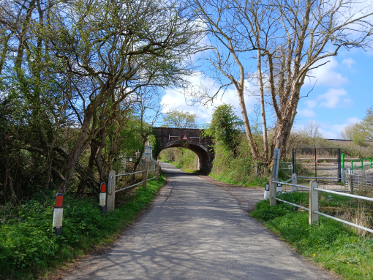
In an effort to maintain its building programme, the Government is trying to change planning rules in the National Planning Policy Framework (NPPF) and, amongst other changes, make it mandatory for councils to meet their building targets.
This is a backdoor route for developers to get through schemes that will see yet more inappropriate building: the wrong properties in the wrong places benefitting only the wrong people.
The consultation on proposed changes to the National Planning Policy Framework (NPPF) finished on 10 March. One change would make it mandatory for councils to house building targets. Under the proposed changes, councils fighting inappropriate developments would have no choice but meet targets by any means necessary, that is, by giving consent to inappropriate developments.
In Sussex, Don’t Urbanise the Downs fears changes proposed to the National Planning Policy Framework will lead to renewed attempts by Welbeck Land to build a 3,500 new town on unspoiled agricultural land along the Roman Greensand Way between East Chiltington and Plumpton. This area is next to, but not protected by, an AONB. Near Croydon, the same company, Welbeck is proposing to build on green belt land.
Key changes Proposed:
Mandatory Housing Targets in Constrained Districts
The Government proposes to make the “Standard Method” a mandatory minimum. This does not account for districts where geography is a “hard constraint.” So, for instance in areas where a significant proportion of land is designated as a National Park, the remaining unprotected countryside acts as a vital buffer and wildlife corridor. This would force the entirety of a district’s housing target onto the small remaining area and lead to “urban-scale” developments that are completely out of character with rural landscapes.
Policy S5 (Unmet Need)
Policy S5 suggests that “unmet need” should justify development outside existing settlement boundaries. This creates a “speculative free-for-all” where developers can bypass local spatial strategies. In essence, a housing shortfall would become a legal license to override local plans and provide developers with more profit. This could create a backdoor for the Eton/Welbeck site at North Barnes Farm in East Chiltington, for example, to be forced into the Local Plan, regardless of local opposition or damage to the landscape, simply by claiming “unmet need”.
In Braunton, North Devon, proposals to build nine social housing properties on part of Braunton Great Field, one of only three surviving fields in which the medieval ‘strips’ are evident, were rejected last autumn. With 83 names on the Housing Register, changes to planning could see the proposal forced through.
Protection of National Park Settings
At present, the NPPF does not go far enough in protecting the setting of National Parks. High-sensitivity landscapes bordering these protected areas should be explicitly shielded from large-scale development to prevent the “boxing-in” of the country’s most precious (and vulnerable) natural assets, enjoyed and loved by millions.