

How to Extend a Rural Graveyard
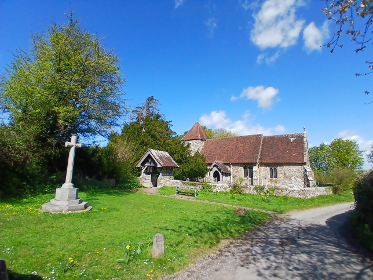 We are running out of grave space at our local church and this article is for anyone who ever wanted to know how you go about extending a rural graveyard. Like Oscar Wilde’s truth, the process is rarely pure and never simple and can have grave repercussions if you get it wrong… (sorry).
Before you start, search your Parochial Parish Council (PCC), congregation and village community for any one with expertise who might be willing and able to take on the various expensive professional aspects that turn out to be involved.
The parish must have funds ready. As Mark Twain observed, ‘Buy land: they aren’t making it any more’ and negotiating the purchase of even a quarter of an acre, and even for something as vital as a graveyard, is tricky. For rural parishes, farms and estates are often held in trust and while previous extensions may have been gifted, you are, sadly, very unlikely simply to be given a chunk of land for the community. And there are fees at every turn…
Here is a handy breakdown of how to extend a graveyard.
Authorisations
- The PCC must pass a formal resolution agreeing to the extension and to purchase the necessary land. This resolution must be minuted, and a copy of the minutes signed by the churchwarden(s) ready for the next step.
- Consult the Archdeacon and Diocesan Registrar who will provide the specific legal framework for your Diocese.
- Under the Church Property Measure 2018, the land for a churchyard is usually transferred to the Vicar/Rector as a ‘corporation sole’.
- The Diocesan Registrar will be able to act for you with all legal aspects if you do not have a benevolent solicitor in your parish.
If you thought the Church of England would have a centralised legal team to do this for its parishes, you are wrong. Your Diocesan Registrar will be willing to act for you but the fees are currently in the region of £2,000 plus VAT which must be paid out of parish funds.
Planning and Environmental checks
- Local Council: obtain ‘Change of Use’ planning permission. Be aware burial grounds have specific access and parking requirements.
- Environment Agency: you may need to commission a Hydrogeological Risk Assessment (which can involve weeks of monitoring) to check the land is suitable for burials and will not contaminate the water table or water supplies. This can be a major issue. The site cannot be within a Groundwater Source Protection Zone 1 or 2.
- There must also be at least 1 metre of dry soil between the highest level of the water table and the bottom of a grave.
- Ministry of Justice: You must check that there is no existing “Order in Council” that prohibits the opening of a new burial ground in that specific area.
Land Registry & Title
- Freehold Only: ensure the land is unencumbered freehold.
- Compliant Map: You will need a Land Registry-compliant, measured, OS map showing the exact boundaries. Another set of professional fees.
- Financial: since the PCC is a charity, a written valuation report is usually required from a qualified Surveyor (MRICS) to be compliant under the Charities Act. This is to ensure you are paying a fair market price.
And, finally, Consecration
You have bought the land and fenced it off, but it is not a ‘churchyard’ in law until the Bishop has consecrated it.
- Churchwardens ‘petition’ the Bishop for consecration of the land.
- The Bishop visits and signs the “Sentence of Consecration.”
Once the land is consecrated, it falls under the Church of England’s “Faculty Jurisdiction”, so adding even a bench or a shed will require the purchase of a ‘Faculty’, or legal permit, from your Diocese.
So, there you have it. Good luck!