

Think before you donate!
 The RNLI and Macmillan charities, amongst others, are maximising their assets by instructing Welbeck Land developers to use their skills and muscle to obtain consent to build on land bequeathed or bought.
This may be a shrewd financial move for the charities, but with property developers now the largest lobbying body in Parliament since the discrediting of the Tobacco Industry, it looks as if a different type of cancer is spreading through the lungs of our country.
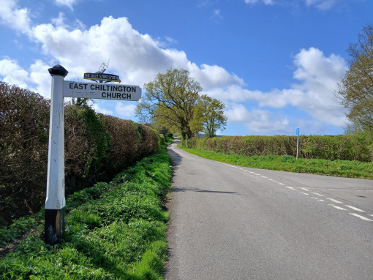
Eton College has been working with Welbeck Land to seek permission to build a new town of 3,250 houses at East Chiltington, a tiny village near Lewes in Sussex. North Barnes Farm was bought speculatively in the 1990s and profits of over £120 million are anticipated if the scheme goes ahead.
The RNLI and Macmillan, along with three other charities, were bequeathed land near Warlingham, Surrey, and have also instructed Welbeck Land to work for them to obtain planning consents.
The nature-loving Surrey land donors must be turning in their graves.
In Surrey, a planning application to build 122 units has been submitted through Welbeck Land to Tandridge District Council. The units comprise 50 dwellings and a care home with 72 beds. These are to be built on a green field site, currently paddocks and woodland, with low light pollution. The landscape is designated ‘of high visual worth’ by the County Council, while the Kennel Farm Field area is designated an Area of Great Landscape Value (‘AGLV’). A care home set on the ridge, with its glaring 24-hour lighting, is hardly likely to enhance that view.
With Kennel Farm Field being partly ‘protected’ by planned conversion to a ‘biodiversity linear park’, Welbeck Land has confirmed that the charities intend to develop the rest of the field with, potentially, up to 760 additional houses. What view?
Erosion of the Green Belt
 This very beautiful landscape is currently part of London’s ‘Green Belt’, wisely designed to preserve separate communities against predicted urban sprawl. In addition, the green belt provides a habitat for increasingly threatened wildlife. At Warlingham, this includes the skylark, currently a Species of Principal Importance that has declined in numbers so significantly that it is registered as a ‘red category species’ for Birds of Conservation Concern.
Welbeck Land has claimed that the North Barnes Farm Site at East Chiltington, which is reached by single track roads and also has very low light pollution, has minimal wildlife of interest. This claim is angrily rebutted by locals who point out not only the existence of numerous rare species but also that the Bevern Stream, a rare spawning ground for sea trout, is already a priority habitat in the UK Biodiversity Action Plan. It is hardly likely to benefit from becoming a building site.
Ironically, Eton College, the RNLI and Macmillan are all very wealthy charities. In 2024 (the most recent figures currently available to the author), Macmillan’s income was over £245 million. As at 31 December 2024 the RNLI had net assets of £816.5m, an increase from the £796.3 million net assets in 2023.
Environmental Credentials???
Even more ironically, even hypocritically, the RNLI and Macmillan both vaunt noble environmental credentials.
The RNLI’s online ‘Protecting Habitats Policy’ states that: “As both landowners and tenants, we strive to ensure we manage and maintain the land we occupy … we respect and adhere to conservation designations such as Sites or Areas of Special Scientific Interest (“SSSI or ASSI”) and Areas of Outstanding Natural Beauty (“AONB”), ensuring we do not damage or interfere with the eco systems, habitats and species of flora and fauna around us – both on land and in the water.”
Macmillan’s website claims “We are committed to reducing our environmental impact… we are deepening our understanding of our environmental performance and are actively taking actions to improve.”
Gemma Peters, CEO of Macmillan, states on the website that ‘At Macmillan, we will do whatever it takes’. A worthy aim, but in the light of these planning applications, it seems more like ‘whatever it takes to make money’.
At what cost to desolate local people and to the natural environment that provides medically recognised benefits to our mental health?